Nikon 55mm f/2.8 ais lens
My review and thoughts on the Nikon micro 55mm 2.8 Ai-S lens. Why I bought my copy, how I use it, and some example images.
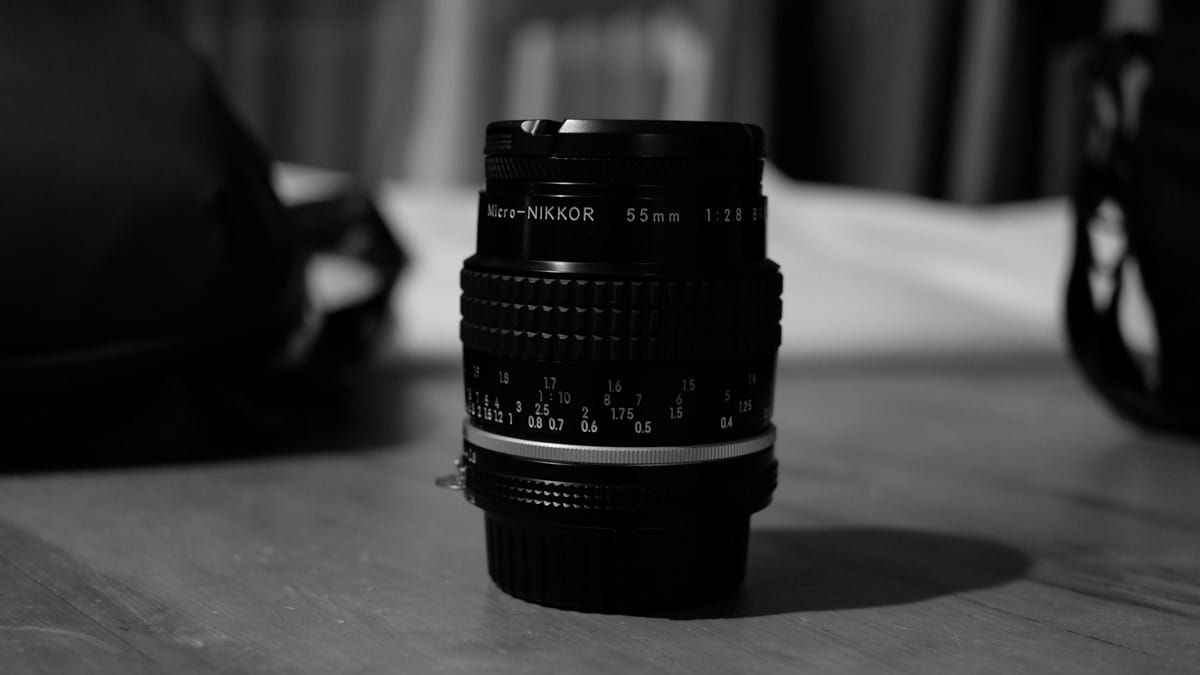
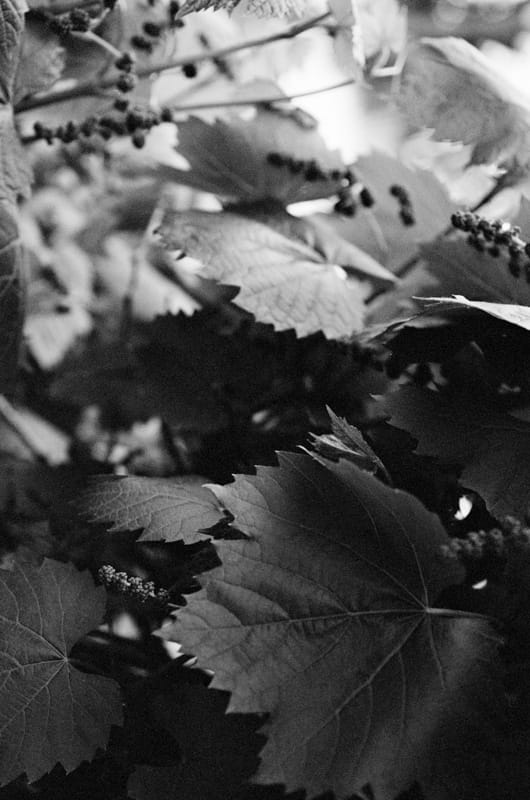
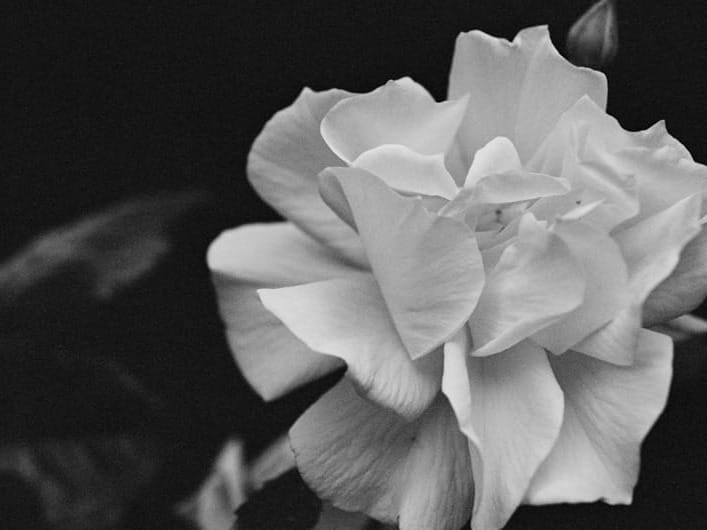
The Nikon 55mm f/2.8 AIS micro lens is a normal focal length manual focus lens designed for close up work. It’s an old school lens made of metal that makes ultra sharp images. The lens has a long focus throw designed for the close up manual focusing required in macro photography.
Things I like about my Nikon 55mm 2.8 ai-s:
- Fantastic sharpness & resolution
- All metal build
- Smooth focus throw
- Works great on film and digital
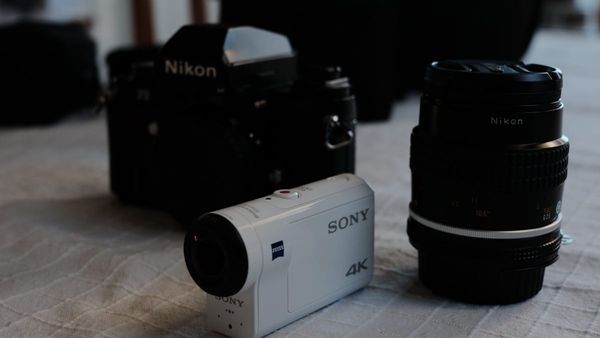
I use this lens on both my Fuji X-T1 and Nikon F3 bodies as a close up lens for macro work and sometimes as a general purpose normal focal length lens. The smooth manual focus throw is great for close up macro work, although a tripod can also help a lot.
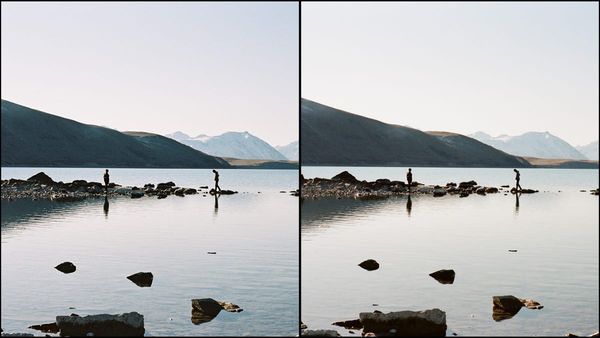
The Nikon (Nikkor) 55mm 2.8 ai-s lens quickly became one of my favorite lenses for use on both film and digital bodies due to it's normal focal length, awesome build quality, and ability to take great macro and distortion free photos.
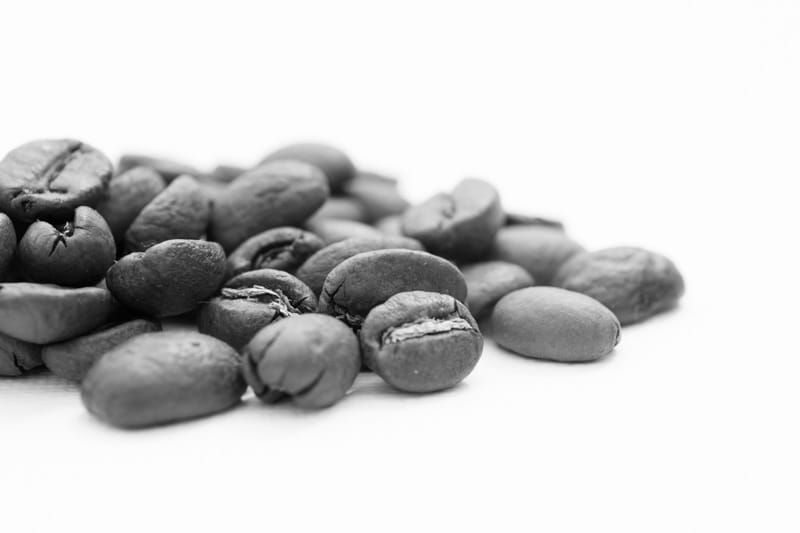
Copying slide film with the Nikon 55mm 2.8 micro
I bought my copy in 2019 to adapt it to my Fuji X-T1 and used it to scan a large volume of my Grandfathers Kodachrome slides in a cost effective manner. Most of the time that I'm shooting film I get a lab to do it but when I was planning to digitize so many old slides it would have been too expensive to get that done professionally. Besides, I was really just digitizing these slides for sentimental reasons, it wasn't necessary to get super high quality scans. It was also a good justification to buy a macro lens that I wanted anyway.
I’ll write more about my experience copying slides with this lens, my camera, and using a light table to do it in another blog post. It performed well for this purpose but if this is your sole purpose for buying a macro lens you’re probably better off getting one with a 1:1 reproduction ratio. The 1:2 reproduction ratio of this lens limits the resolution you can reach copying a 35mm sized frame. It was fine for copying my grandfathers old photos but for more serious macro work and if is better to look at something like the Nikon 60mm f2.8D lens which has a 1:1 reproduction ratio or something from another manufacturer.
The process of copying slides using this method quickly became tedious and I was glad when I’d completed copying all the images that were worthwhile. I later started copying my own black and white film using the same method. I liked the results and having digital RAW files of my own negatives was a nice novelty but I found it too boring to do this regularly. Maybe if I had a dedicated space to set and leave some of the gear up I'd try it again. For the limited amount of film I shoot now, my local pro lab does a great job and I'm happy to send the work their way.
Equipment I used to copy old slide film:
- Fuji X-T1 with Nikkor 55mm micro lens adapted
- Kaiser slimlite plano 2454
- Tripod
- Spirit level (hot shoe mount)
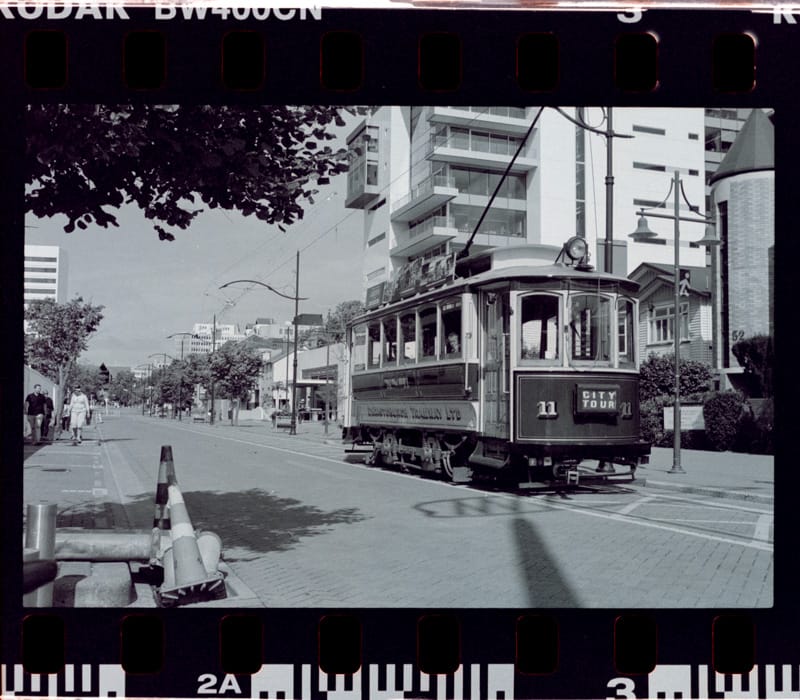
Why I chose an ai-s micro lens
There is a reason that I bought an ai-s Nikon lens over the 60mm 2.8D lens that has the better reproduction ratio and is optically 'better' than the 55mm. I even had the option of buying the 60mm in good condition at roughly the same price. The reason is I like Ai-S lenses, it’s that simple. The color and contrast that comes out of these lenses is just nicer to my eyes and I like working with a manual focus lenses in most situations.
Over time I have used this lens a for close up product photography, macro photography on my Fuji camera, where it provides a roughly 80mm field of view due to APS-C crop, and over time it has become one of my most used lenses on my 35mm camera.
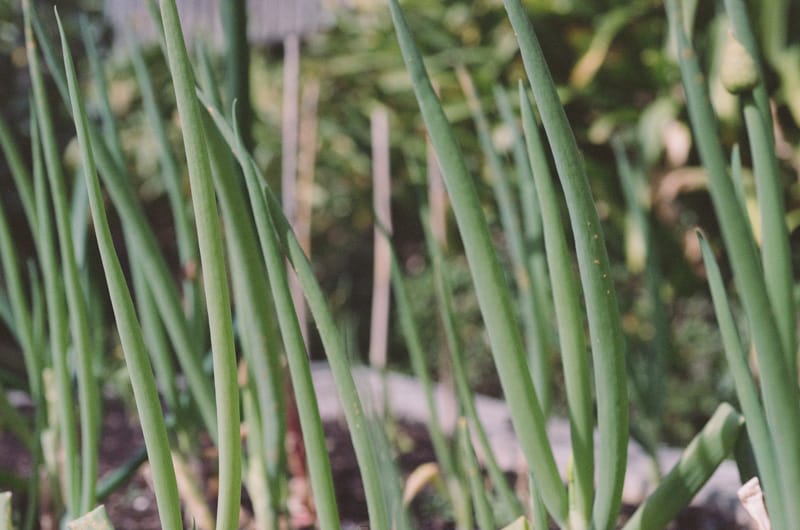
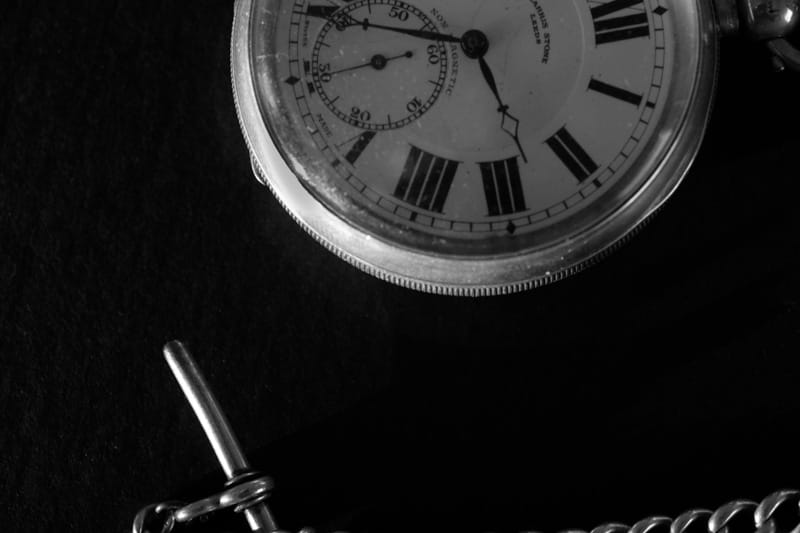
In macro work the focus throw is smooth to enable precision focusing. I’ve cut down on a lot of photography gear recently so no longer have a 50mm prime lens. I’ve turned to this lens more often and used it just as a 55m prime for regular photography. I have got used to the long focus throw when using it for this type of work, the only possible downside is that it may be too sharp sometimes. I may have to look at possible options for filtration if I don’t buy another lens at some point.
Alternative lens options
There are a few alternatives I considered when looking to buy a macro/micro lens. One was the Nikon 55mm 3.5 AI lens. If I had found this lens in good condition locally then I may have bought it. It has a great reputation online for its optics and the image examples I’ve seen look fantastic. The problem was I couldn’t find it. I did find a copy of the Nikon 55mm 3.5 non-ai lens for sale local to me. This would have worked with my Fuji adapter but not on my Nikon film camera and I wanted one I could use on both. The Nikon F3, which I now have, can mount non-ai lenses but I didn’t own it at this stage.
The Nikon 60mm 2.8D I did find local to me second hand for a good price, it’s a better lens technically, and I could use it both my Fuji (with adapter) and Nikon cameras. But you shouldn’t base gear decisions on technical specs alone. I wanted the 55mm AIS version because the results I saw were more to my preference and in the five or so years since I bought it I haven’t regretted that decision.