How to Travel with Camera Gear
My thoughts about traveling with camera gear. What I'm doing on my next trip, what I've done wrong in the past, and some packing examples.
I had been preparing for an international trip for a while and would need to take some camera gear with me, which got me thinking? Last time I took a major trip with photography gear it was a total pain to carry it all around. This time I would downsize the amount of gear to only the necessary, have bags to transport the equipment that would be easy to carry, and be safe in some of the more pickpocket tolerant streets of the World.
What gear to take: Trying to travel as light as possible
It goes without saying that I aim to travel as light as possible. Camera/tech gear, no matter how small and light, always adds up. A few light weight items, plus chargers & cables, added together quickly becomes a pain to lug around multiple cities. It's different if you're flying straight to your main destination. In that case a heavier backpack or suitcase isn't that big of a deal. For those of us that like a bit of adventure travel, multiple cities, or just like to remain a bit spontaneous then lighter is better.
The upcoming trip was going to be, in part, a photography trip. In this case traveling super light was probably not going to happen. The principle remains the same though, only take what you need. Listed below was my thinking on gear for this trip.
Definite items to take:
- Mirrorless camera: Fuji X-T1 & 27mm lens
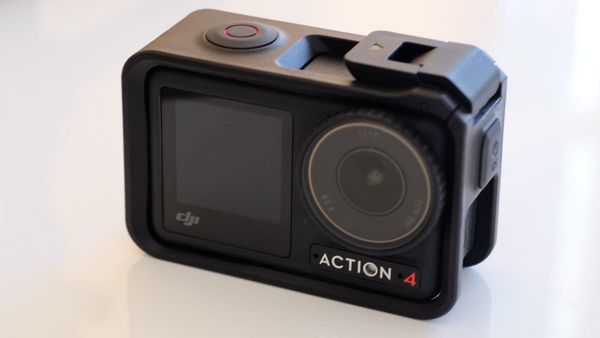
- Action camera: DJI Action 4
Possible items to take:
- Film camera: Nikon F3
- Lens: Nikon 55mm
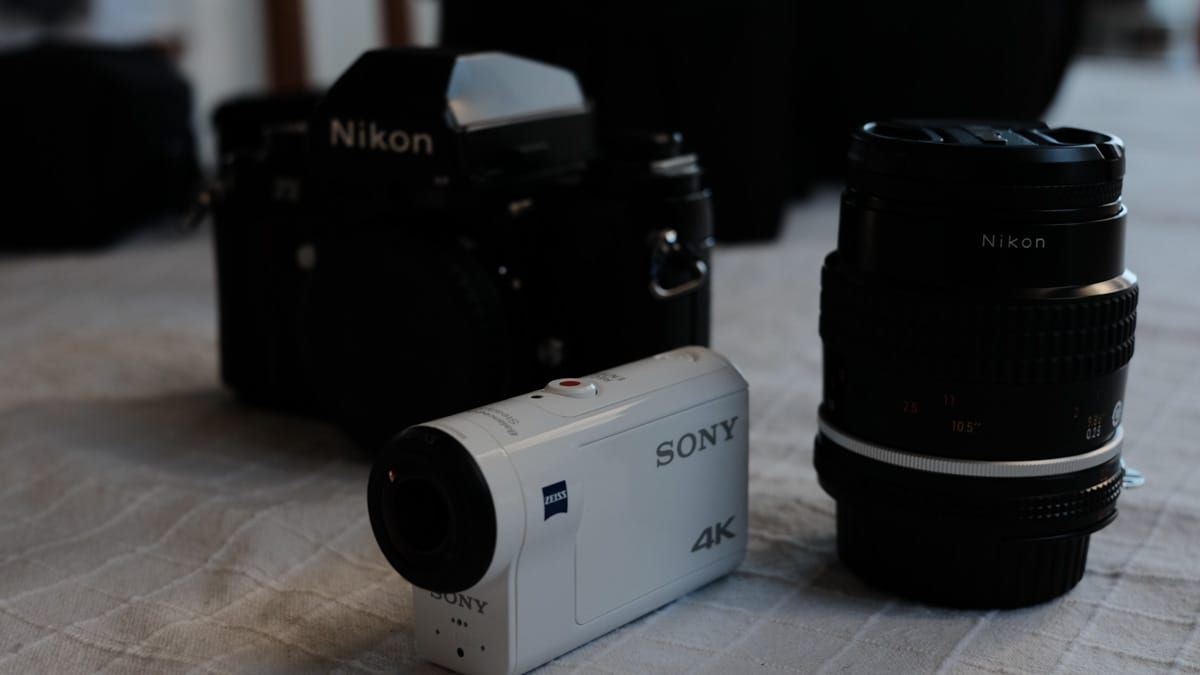
- Spare video camera: Sony FDR X3000
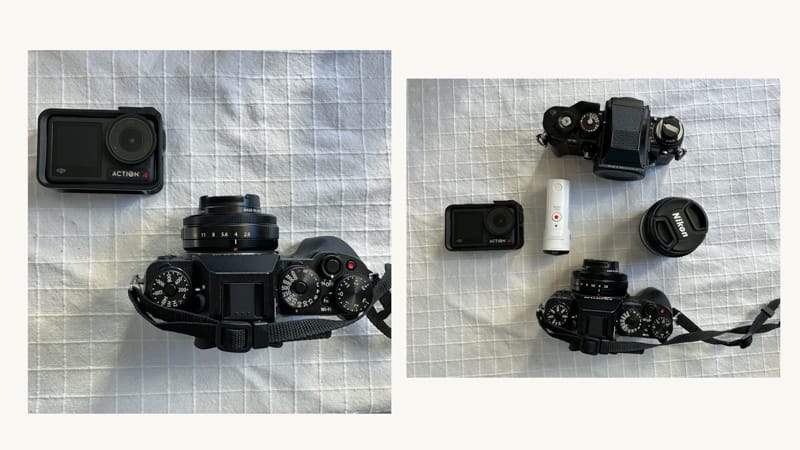
I would have liked to take my Nikon F3 to do some shoots with it in Europe. However, I was taking a detour in Asia before getting there and I knew carrying around extra weight in super high humidity & heat would be a big problem. The Nikon macro lens could be an option on its own as I had an adapter for the Fuji camera. Packing gear for this trip was a balancing act between what would be useful once I arrived in Europe, for the photography leg of this trip, and what would be uncomfortably heavy to carry around in Asia.
I decided to keep it as light as possible and take one main stills camera and one small main video camera. The X-T1 with 27mm lens and the DJI Action 4. With the possible addition of a spare action camera, the Sony x3000.
How not to travel with camera gear
On a previous photography trip to England, in addition to a suitcase and carry on backpack, I'd taken an over the shoulder laptop bag and two camera shoulder bags crisscrossed over myself. It wasn't something I thought about much until I was already traveling. Thankfully, I was traveling straight to my main destination as this setup was heavy, cumbersome, and very uncomfortable. If I didn't have a friend's house to leave some gear soon after arriving in England I don't know what I would have done. There wasn't any one piece of equipment that was heavy but it is a lesson that every single bit of equipment adds up very quickly.
Gear that I carried, in addition to my checked suitcase and carry on backpack, on that previous trip:
- Laptop in a cross body bag
- Small camera shoulder bag with Fuji X-T1 & lens
- Large camera shoulder bag with Nikon FE2, lens, and accessories
This particular trip was a few years ago and I doubt there is any airline that would let you carry all this on the plane now anyway. Even if you could find one, don't do it.
How I travel with camera gear now
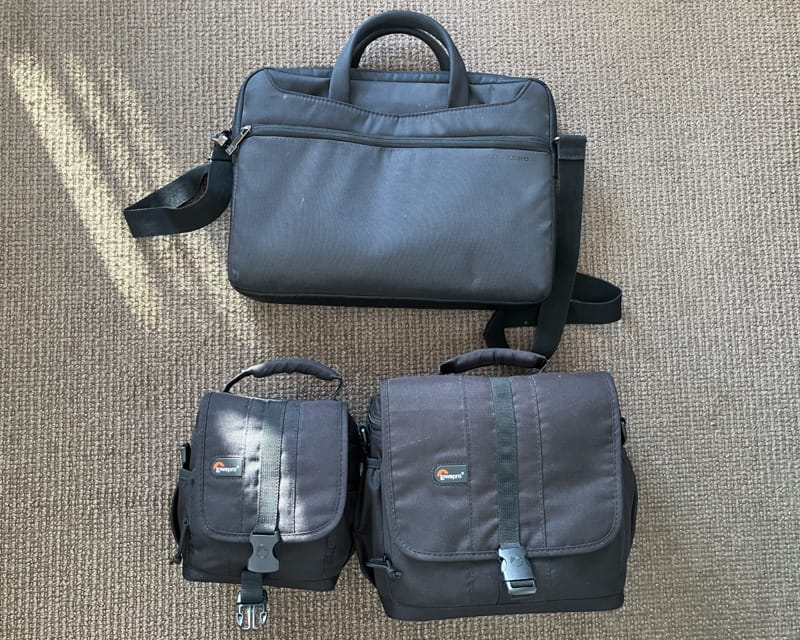
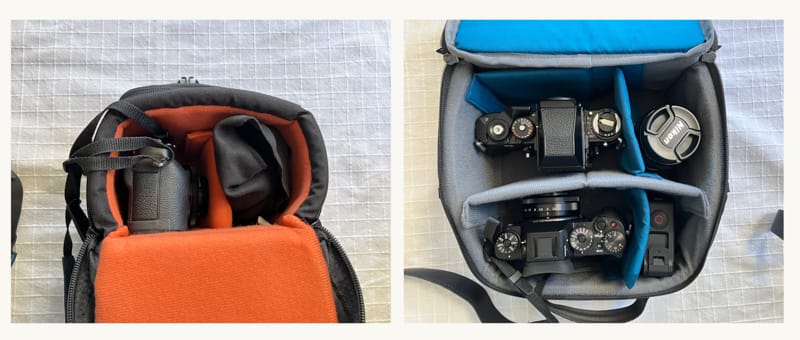
I have put together a few different setups to carry camera equipment depending on exactly how much gear I need to take. The big cross body shoulder bags I leave at home. For very small load outs I have one small LowePro shoulder bag, it's an old style I haven't seen anywhere recently. This can fit a couple of action cameras or one action camera plus Fuji X-T1 plus pancake lens. If I want to take a bit more then I have a Tenba backpack insert. This takes up a bit more space than the small LowePro bag but can fit a lot more stuff due to the way gear is organized inside.
In the Tenba insert I can fit two cameras, mirrorless and film SLR, action camera, and extra batteries and accessories in one package. While I would still be concerned about adding too much weight, the Tenba insert can fit a lot in it for its size.
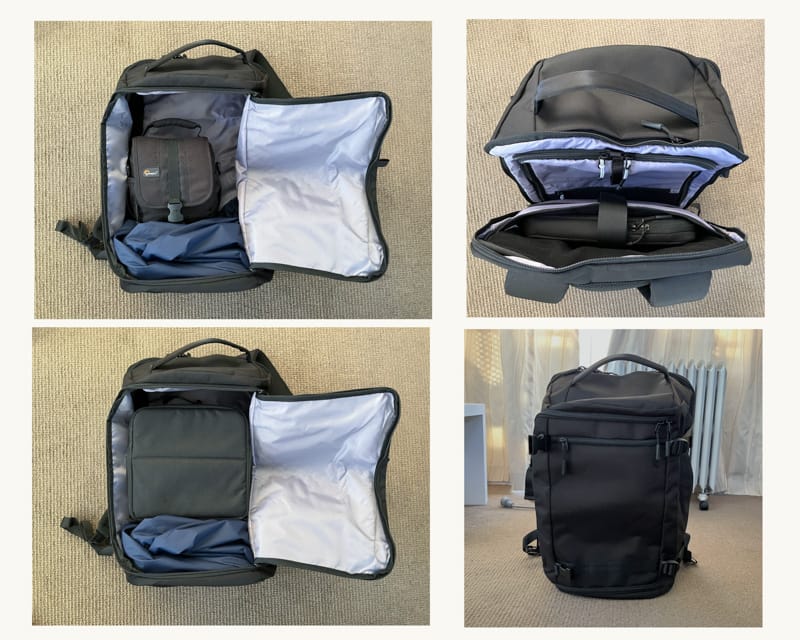
I also put the laptop inside my carry on backpack now too. I have come to use the North Face Router and Tomtoc T-67 as my larger carry on backpacks now. I think both of these have there pros and cons, I'm not sure which one I like more yet but they are both big enough to fit my laptop, camera insert/bag, and some other general travel stuff easily.
Current camera equipment I travel with:
- Large carry on backpack(35-40L): Tomtoc T-67 or North Face Router
- Laptop goes in backpack with dedicated laptop sleeve
- Camera bag goes in carry on backpack: small Lowepro or Tenba backpack insert
The Tenba insert I have is the size 9 backpack style insert, a medium sized cube. As far as the backpacks themselves go, I like the design and layout of the North Face Router better. I like that it is a traditional backpack design with lots of pockets for small accessories. However for heavier loads I'm not sure if the straps on the North Face are reinforced that well. Mine has not failed yet but it does concern me a bit. The Tomtoc T-67, while simpler in internal design, is made of thicker material and the straps seem more heavy duty and suitable for carrying more weight.
Small accessories
Another consideration is keeping your gear organized and safe while traveling. Many people are concerned with keeping expensive gear safe, and that is a valid concern. But also keeping the small stuff organized is something to think about too. while it's possible someone will pickpocket me or blatantly try to steal a piece of equipment, it's more likely I'll be disorganized, rushed, or just plain tired at some point of the trip.
Keeping gear organized reduces the risk of loss in these circumstances I think. That's one of the reasons I like the North Face bags, there is a good amount of organization built into them. If I'm using the Tomtoc bag then I will use a Tech organizer/pouch and put all my memory cards, cords, and small accessories into it.
I also use nondescript accessories like camera straps and bags. In some locations, a camera bag with a brand on it like Nikon, Canon, or other obvious camera brand is a magnet for trouble. This is one of the big reasons to use an insert or small bag that can be put inside an ordinary backpack. As for straps, on the Fuji camera I use the strap it came with. It has embossed Fuji branding that isn't obvious unless under close inspection. On my Nikon F3 I use the AN-4B black nylon strap. It's a Nikon brand strap but it's inexpensive, not flashy, and unbranded.
How far you will take this depends very much on where you are traveling. Hopefully some of my previous travel habits serve as a warning and you are traveling lighter and easier with your photography gear next time.